
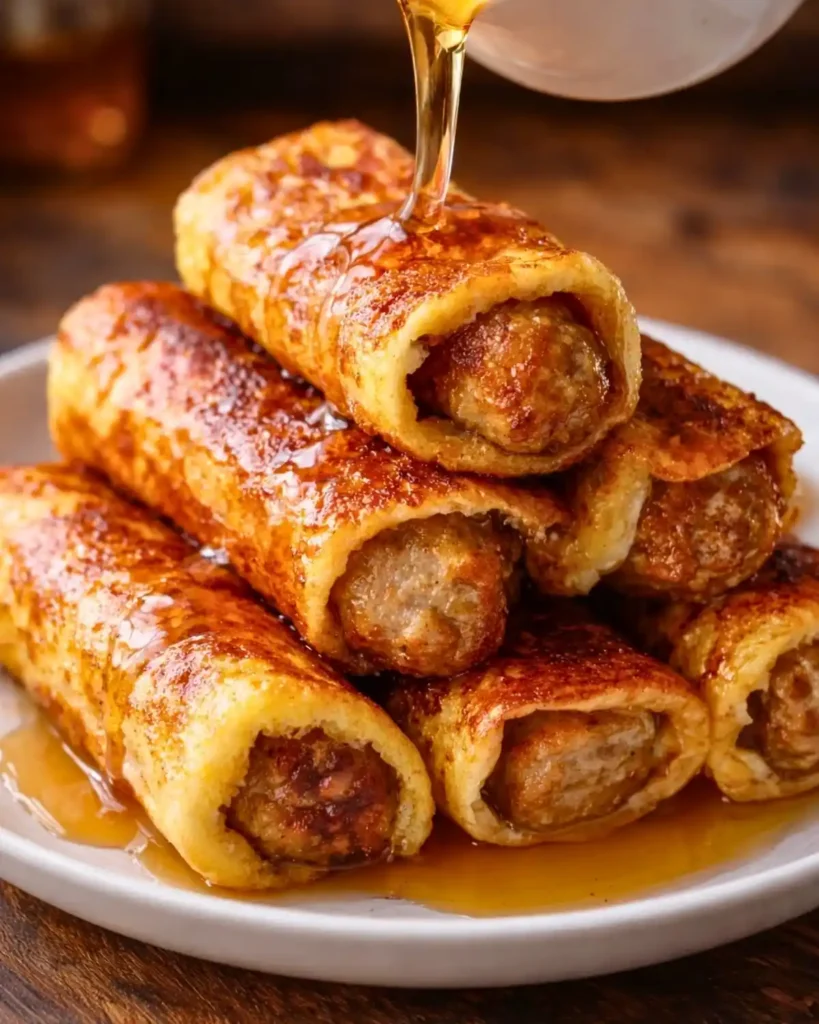
Sausage French toast roll-ups are a savory-sweet breakfast dish that combines tender sausage links wrapped in bread and coated with a cinnamon-egg batter, then pan-fried until golden and served with maple syrup. This innovative twist on traditional French toast delivers restaurant-quality results at home while impressing family and guests alike. The combination of seasoned breakfast sausage and sweet cinnamon custard creates an irresistible flavor profile that keeps people coming back for seconds.
| Prep Time | 15 minutes |
| Cook Time | 12 minutes |
| Total Time | 27 minutes |
| Servings | 12 roll-ups (3-4 servings) |
| Difficulty | Easy |
| Cuisine | American Breakfast |
Why This Recipe Works
I discovered the magic of sausage French toast roll-ups when searching for a breakfast dish that satisfied both sweet and savory cravings simultaneously. The key innovation lies in wrapping pre-cooked sausage inside flattened bread before dipping in the egg custard mixture. This method ensures the sausage stays warm and juicy while the bread exterior becomes crispy and golden.
What makes this recipe foolproof is the preparation sequence. By cooking sausages first and allowing them to cool slightly, you prevent the bread from becoming soggy during the dipping stage. The flattening step using a rolling pin eliminates thick, doughy centers that often plague homemade breakfast creations. I’ve tested this recipe dozens of times, and the combination of medium heat, proper butter ratios, and a full egg coating produces consistent results every single time.
The cinnamon-vanilla egg mixture penetrates the bread just enough to create a custard-like interior while maintaining structural integrity throughout cooking. This balance transforms an ordinary breakfast into something that tastes like a five-star brunch offering. The nutritional profile works well too, with protein from both the sausage and eggs keeping you satisfied until lunch.
Ingredients
| Ingredient | Quantity | Notes & Alternatives |
|---|---|---|
| Breakfast sausage links | 12 links | Pre-cooked or raw. Choose halal-certified for dietary preferences. Chicken sausage works as a leaner substitute. |
| Sandwich bread | 12 slices | White or brioche works best. Remove crusts for easier rolling. Sourdough adds tanginess if preferred. |
| Large eggs | 3 | Room temperature eggs blend smoother. Free-range or pasture-raised preferred. |
| Milk | 1/2 cup | Whole milk creates richest custard. Almond or oat milk suitable for dairy-free adaptation. |
| Vanilla extract | 1 teaspoon | Pure vanilla provides superior flavor. Pure almond extract adds dimension if substituted partially. |
| Ground cinnamon | 1/2 teaspoon | Fresh cinnamon yields better results than old spice. Use Ceylon for milder notes. |
| Butter | 2-3 tablespoons | Divided throughout cooking. Ghee provides nuttier flavor if preferred. |
| Maple syrup | For serving | Pure maple syrup recommended. Grade A offers lighter taste; Grade B provides robust molasses notes. |
| Powdered sugar | Optional | For dusting before serving. Cinnamon sugar blend adds extra spice. |
Step-by-Step Instructions
Phase 1: Sausage Preparation
- Cook the sausage links according to package directions if using raw sausages, ensuring they reach a safe internal temperature of 160°F. If pre-cooked, heat them gently in a skillet for 2-3 minutes. Place cooked sausages on a paper towel-lined plate and allow to cool for 5 minutes until comfortable to handle.
Phase 2: Bread Preparation
- Remove the crusts from all 12 bread slices using a sharp knife, cutting cleanly along the edges of each slice. Place one slice on a clean work surface and use a rolling pin to flatten the bread until it reaches approximately 1/8-inch thickness, ensuring even compression without tearing.
- Position one cooled sausage link at the end of the flattened bread slice closest to you. Roll the bread tightly around the sausage, starting from the end with the sausage and rolling away from your body until the seam faces downward. Repeat this rolling process for all remaining bread slices and sausages, placing finished roll-ups seam-side down on a clean plate.
Phase 3: Egg Mixture Preparation
- Crack the three large eggs into a shallow dish or wide bowl and whisk vigorously for 15-20 seconds until the yolks and whites combine completely. Add the milk, vanilla extract, and ground cinnamon to the egg mixture while continuing to whisk until all ingredients incorporate evenly and no streaks remain.
Phase 4: Dipping and Cooking
- Heat a large nonstick or cast-iron skillet over medium heat for 1-2 minutes until a drop of water sizzles gently across the surface. Add 1 tablespoon of butter to the hot skillet and allow it to melt completely, coating the entire bottom surface evenly.
- Take the first sausage roll-up and dip it into the egg mixture, ensuring all sides receive a complete coating by turning it once with a fork or tongs. Avoid submerging longer than 2 seconds per side to prevent excess sogginess. Place the coated roll-up into the hot skillet seam-side down.
- Repeat the dipping and placement process until 4-5 roll-ups fit in the skillet without crowding, leaving space between each piece for even heat distribution. This batch-cooking method prevents steam from building up and making the bread soggy.
- Cook the first batch for 2-3 minutes on the seam-side-down position until the bottom achieves a golden-brown color. Using a spatula, gently flip each roll-up to cook the opposite side for another 2-3 minutes until this side matches the golden-brown color of the first.
- Transfer the cooked batch to a serving plate and keep warm while repeating steps 6-8 with remaining roll-ups, adding additional butter to the skillet as needed between batches.
Phase 5: Finishing and Serving
- Dust the cooked sausage French toast roll-ups with powdered sugar if desired, using a fine mesh sieve to distribute evenly. Arrange the roll-ups on serving plates and serve immediately while still warm, placing a small bowl or ramekin of maple syrup alongside for dipping.

Chef Tips for Perfect Results
- Flatten bread consistently. Use even pressure across the rolling pin to achieve uniform thickness. Uneven bread causes some areas to become overly crispy while others remain doughy.
- Cool sausages completely. Warm sausages release steam when wrapped, creating moisture that softens the bread prematurely. Allow at least 5 minutes resting time after cooking.
- Use medium heat exactly. High heat burns the exterior before the egg custard sets inside. Medium heat ensures golden-brown exteriors with creamy centers every time.
- Don’t skip the rolling pin step. Hand-flattening or tearing bread creates irregular pieces that cook unevenly and don’t roll smoothly around sausages.
- Whisk the egg mixture thoroughly. Lumpy custard won’t coat evenly, creating patches of undercooked bread. Whisk for a full 20 seconds minimum until completely homogeneous.
- Batch cooking prevents crowding. Overcrowding the skillet drops the temperature, resulting in steamed rather than fried roll-ups that lose their golden exterior.
Common Mistakes to Avoid
Mistake 1: Skipping the bread flattening step. Rolling unflattened bread creates thick, doughy pockets that don’t cook through properly and become soggy rather than crispy. Fix this by using a rolling pin to reduce thickness to 1/8 inch before adding the sausage. The flattened bread also wraps around the sausage more smoothly without gaps or tears.
Mistake 2: Using hot sausages while rolling. Steaming sausages release moisture directly into the bread, creating a soggy exterior that absorbs the egg mixture unevenly. The fix involves cooking sausages first, then allowing them to rest at room temperature for 5 minutes before rolling. This also prevents burns to your fingers during the rolling process.
Mistake 3: Cooking at too-high heat. High temperatures brown the exterior before the egg custard sets inside the bread, resulting in burnt outsides with uncooked egg centers. Maintain medium heat throughout, which typically translates to setting your burner between 5 and 6 on most stove types. The golden color should develop gradually over 2-3 minutes per side.
Mistake 4: Overfilling or underfilling the rolls. Using two sausages causes bread to tear during rolling, while using no sausage creates empty bread tubes. The single-sausage method works perfectly for 12 standard sandwich bread slices. One link fills the roll completely without bursting through the bread.
Mistake 5: Dipping too long in the egg mixture. Extended soaking causes the bread to absorb excessive liquid, resulting in waterlogged centers that collapse during cooking. Achieve consistent results by dipping for exactly 2 seconds per side, using tongs to turn quickly. This minimal contact ensures the egg adheres to the exterior without permeating the bread structure.
Variations and Substitutions
| Ingredient | Substitution | Impact on Flavor |
|---|---|---|
| Breakfast sausage links | Chicken or turkey sausage | Leaner, lighter protein that reduces richness while maintaining savory notes. Poultry sausage pairs excellently with cinnamon. |
| Sandwich bread | Brioche or challah | Richer, slightly sweeter bread creates more custardy interiors. Results in more decadent final product suitable for special occasions. |
| Milk | Heavy cream | Creates denser, more luxurious custard coating. Increases richness significantly, making fewer roll-ups more satisfying. |
| Vanilla extract | Almond extract | Reduces sweetness while adding subtle nuttiness. Creates more complex flavor profile that appeals to savory-preference diners. |
| Ground cinnamon | Pumpkin pie spice blend | Introduces nutmeg, clove, and ginger notes alongside cinnamon. Perfect for fall-themed brunches and seasonal variations. |
| Butter | Coconut oil or ghee | Coconut oil adds subtle tropical notes; ghee provides nutty, deeply savory character that complements sausage beautifully. |
| Maple syrup | Honey or agave nectar | Honey adds floral complexity and darker color; agave provides neutral sweetness without maple undertones. |
| Powdered sugar dust | Cinnamon sugar blend | Creates sweet-spicy finish that intensifies the cinnamon already present in the custard coating. Increases overall spice impact noticeably. |

Serving Suggestions and Pairings
Sausage French toast roll-ups shine as the centerpiece of weekend brunch gatherings where guests appreciate creative breakfast fare. Serve these alongside fresh fruit platters featuring berries, melon, and grapes to provide acidic contrast to the rich, sweet-savory profile. A green salad with vinaigrette offers another sophisticated pairing that brightens the overall meal.
For special occasion breakfasts, present the roll-ups on a tiered serving platter with maple syrup in a decorative ramekin, powdered sugar shaker, and fresh mint for garnish. This restaurant-style presentation impresses overnight guests and justifies the minimal extra preparation time. Accompany with fresh-squeezed orange juice and strong coffee for a complete brunch experience that rivals hotel offerings.
Casual family mornings benefit from serving these alongside scrambled eggs, roasted potatoes, and fresh pastries to create a diverse breakfast spread. Children particularly enjoy the handheld nature of roll-ups, which they can dip into syrup independently. Pair with cold milk and fresh fruit to create a balanced breakfast that satisfies multiple flavor preferences at one table.
Holiday brunches get elevated when sausage French toast roll-ups serve as the protein centerpiece, allowing traditional sides like hash browns and pancakes to complement rather than compete. The savory-sweet balance works beautifully after morning celebrations, providing substantial nutrition without the heaviness of purely sweet breakfast options.
Storage and Reheating
| Method | Duration | Instructions |
|---|---|---|
| Refrigerator Storage | Up to 3 days | Place cooled roll-ups in an airtight container with parchment paper between layers to prevent sticking. Store in the coldest part of your refrigerator. Allow to reach room temperature for 15 minutes before reheating. |
| Freezer Storage | Up to 2 months | Arrange cooled roll-ups on a baking sheet in a single layer and freeze for 2 hours until solid. Transfer to freezer bags with labels indicating date and quantity. Freezing individually before bagging prevents clumping. |
| Oven Reheating | 8-10 minutes | Preheat oven to 350°F. Place roll-ups on a baking sheet and cover loosely with foil to prevent browning. Heat until warmed through completely. This method preserves crispiness best compared to microwave reheating. |
| Skillet Reheating | 3-4 minutes | Heat a large skillet over medium heat with 1 tablespoon butter. Place roll-ups in the skillet for 1-2 minutes per side until warmed and the exterior re-crisps slightly. This method works best for refrigerated roll-ups served within 1 day. |
| Microwave Reheating | 1-2 minutes | Place roll-ups on a microwave-safe plate and cover with a damp paper towel to retain moisture. Microwave at 50% power for 60-90 seconds, checking halfway through. This fastest method sacrifices some exterior crispiness. |
Nutritional Information
Approximate values per serving (1 roll-up):
| Nutrient | Amount |
|---|---|
| Calories | 185-210 |
| Protein | 8-10 grams |
| Total Fat | 10-12 grams |
| Saturated Fat | 4-5 grams |
| Carbohydrates | 16-18 grams |
| Dietary Fiber | 0.5-1 gram |
| Sugars | 2-3 grams |
| Sodium | 380-420 milligrams |
These nutritional values vary based on specific sausage brands, bread type, and butter quantities used during cooking. Using whole wheat bread increases fiber content significantly. Leaner sausage options reduce total fat while maintaining protein levels effectively.
Frequently Asked Questions
Can I make sausage French toast roll-ups without eggs?
No, eggs serve as the binding agent that creates the custardy coating and helps the breadcrumb exterior achieve its golden-brown exterior during cooking. Without eggs, the bread becomes dry and uncooked in places. You could substitute flax eggs or aquafaba if following a vegan diet, though texture will differ slightly from the traditional recipe.
How do I know when the sausage French toast roll-ups are done cooking?
The roll-ups are done when both sides achieve a deep golden-brown color, typically 2-3 minutes per side at medium heat. The exterior should feel slightly crispy when touched with a fork, and the interior should feel warm when pressed gently. If the bread appears pale, continue cooking for another minute per side.
What should I do if the bread tears when rolling the sausage?
Bread tears when not flattened sufficiently using the rolling pin. Start over with a new bread slice and apply more consistent, even pressure with the rolling pin until the bread reaches 1/8-inch thickness. If the sausage is still too warm, it causes steam that weakens the bread structure and increases tearing likelihood.
Can I prepare sausage French toast roll-ups the night before?
Yes, you can assemble the roll-ups completely up to 8 hours ahead of cooking and refrigerate them on a baking sheet covered with plastic wrap. Do not dip them in the egg mixture until immediately before cooking, as pre-dipped roll-ups become soggy overnight. Prepare the egg mixture fresh just before dipping for best results.
How many servings does this recipe make?
This recipe yields 12 individual roll-ups, which serves 3-4 people as a complete breakfast or 6 people as part of a larger brunch spread. Each person typically consumes 2-3 roll-ups as a main protein source. For smaller gatherings, halve all ingredients and cook in a smaller batch, which actually improves consistency since you’ll make fewer trips to the stove.
Conclusion
Sausage French toast roll-ups deliver an impressive breakfast that combines savory sausage with sweet cinnamon custard in every bite. This complete guide covers ingredient selection, precise cooking techniques, and creative variations that transform an ordinary morning into something restaurant-quality. The 27-minute total time makes these roll-ups perfect for weekend brunches, special celebrations, or whenever you want to elevate your breakfast routine. Follow these step-by-step instructions and chef tips to achieve perfect golden exteriors and creamy interiors consistently. Serve warm with maple syrup for dipping and discover why this innovative breakfast dish has become a brunch favorite.
Sausage French Toast Roll-Ups

Sausage French toast roll-ups are a savory-sweet breakfast dish that combines tender sausage links wrapped in bread and coated with a cinnamon-egg batter, then pan-fried until golden and served with maple syrup.
- Prep Time: 15 minutes
- Cook Time: 12 minutes
- Total Time: 27 minutes
- Yield: 3/4 servings
Ingredients
- 12 breakfast sausage links pre-cooked or raw
- 12 slices sandwich bread crusts removed
- 3 large eggs
- 1/2 cup milk
- 1 tsp vanilla extract
- 1/2 tsp ground cinnamon
- 2 –3 tbsp butter for cooking
- Maple syrup for serving
- Optional: powdered sugar for dusting
Instructions
- Cook the sausages:
- If using raw sausages, cook according to package directions until fully done. Set aside to cool slightly.
- Prep the bread:
- Use a rolling pin to flatten each slice of bread. Place a cooked sausage at one end and roll up tightly.
- Make the egg mixture:
- In a shallow dish, whisk together eggs, milk, vanilla, and cinnamon.
- Dip & cook:
- Heat a large skillet over medium heat and melt 1 tbsp butter. Dip each roll-up into the egg mixture, coating all sides, and place in the skillet seam-side down.
- Fry until golden:
- Cook 2–3 minutes per side, turning to brown evenly. Add more butter to the skillet as needed.
- Serve:
- Dust with powdered sugar if desired and serve warm with maple syrup for dipping.