
Ceviche is a beloved dish across Mexico, where fresh white fish is gently “cooked” in lime juice, then tossed with crisp onions, spicy chiles, cilantro, and other bold ingredients. Also called cebiche, seviche, or sebiche, it’s a no-cook recipe perfect for warm days or as an elegant appetizer that looks impressive but comes together quickly.
What makes this ceviche recipe truly shine is its balance. Inspired by my Grandma’s way of preparing it in Michoacán, the citrus flavor is bright but not overpowering, just like the limes she used, which were softer and sweeter than the ones we find here.

Ceviche Recipe: Easy, Fresh, and Full of Flavor
- Prep Time: 20 mins
- Cook Time: 0 mins
- Total Time: 20 mins (plus marinating)
- Yield: 4 servings
- Category: Appetizer
- Method: No-Cook
- Cuisine: Latin American
- Diet: Gluten Free
Description
This classic ceviche recipe features fresh white fish marinated in lime juice, mixed with herbs, onions, and optional avocado or coconut milk for a refreshing and traditional Latin American dish.
Ingredients
1 lb fresh white fish (sea bass or snapper), cubed
1 cup fresh lime juice
1/2 cup red onion, thinly sliced
1–2 jalapeños, finely chopped
1/2 cup chopped cilantro
1 medium tomato, diced (optional)
1 small avocado, diced (optional)
Salt to taste
2 tbsp coconut milk (optional)
Instructions
1. Cut the fish into 1/2-inch cubes and place in a non-metal bowl.
2. Pour lime juice over fish until fully submerged. Cover and refrigerate.
3. Let the fish marinate for 30 minutes to 2 hours, until opaque.
4. Drain half the lime juice. Add onion, cilantro, peppers, tomato, and avocado.
5. Add salt and coconut milk if using. Gently stir and chill for 5–10 minutes.
6. Serve immediately with tostadas, chips, or lettuce cups.
Notes
Use only very fresh fish for safety and flavor.
Do not over-marinate—this can toughen the fish.
Add-ins like mango or olives bring new regional twists.
Table of Contents
Table of Contents
A Family Tradition Inspired by the Sea: My Favorite Ceviche Recipe
Some recipes don’t come from books. They come from people. For me, ceviche is one of those recipes—handed down, never written, and full of heart. I learned to make it as a girl watching Grandma in our warm multigenerational kitchen. While my mom worked and I tried to keep my little one from stealing citrus slices, Grandma showed me how to prepare ceviche the way she learned in Michoacán—generous with lime, always with love, and sometimes with a splash of coconut milk.
She’d press fresh fish between her fingers, smile, and say, “Now wait. Let the lime work.” No stove needed. Just the magic of citrus. We’d wait together while the fish slowly turned opaque, like little white petals. Those moments—the sound of laughter, the scent of lime, the way Grandma told stories about cooking by the ocean—still live in every bowl I make.
Why This Ceviche Recipe Still Shines Today
There’s a reason this dish remains a family favorite. It’s quick, fresh, and full of flavor, but more than that, it’s a ritual of togetherness. Every time I prepare ceviche, I think of busy women like me, who want something wholesome but don’t have hours to spare. This ceviche recipe uses simple, accessible ingredients—white fish, lime juice, onion, cilantro—but the result feels like a dish from a coastal town.
It’s flexible too. Some nights, I make it just like Grandma did. Other days, I add avocado or serve it with tostadas like the ones I saw in this version from Food & Wine. No matter the version, the soul of the recipe is the same: fresh fish, citrus cure, and tradition on every plate.
Simple Ingredients for Authentic Ceviche Recipe
Freshness Is Everything

When it comes to making ceviche, the secret isn’t complicated—it’s the freshness. Your entire ceviche recipe depends on how fresh your fish is. Choose a firm, white-fleshed variety like red snapper, sea bass, or halibut. It should smell clean, never fishy. The acid from the citrus will “cook” the fish, meaning there’s no heat involved—so quality matters more than ever.
Lime juice is the traditional citrus used, and it’s important to use freshly squeezed juice, not bottled. The acid breaks down the proteins in the fish, turning it from translucent to opaque. That’s how you know it’s ready.
This is also where Grandma’s influence came in. Some days she’d add just a dash of coconut milk to soften the tang. Other times, we’d add finely chopped mango for a hint of sweetness or a sliced jalapeño for heat. The recipe is forgiving and endlessly customizable, as long as your foundation is sound: clean fish, bright citrus, and crisp vegetables.
Your Grocery List for Ceviche Magic
Here are the ingredients you’ll need for this classic white fish ceviche recipe:
1 pound of fresh white fish (sea bass, red snapper, or halibut), cut into small, even cubes
1 cup freshly squeezed lime juice (about 8–10 limes)
1/2 cup red onion, thinly sliced
1–2 serrano or jalapeño peppers, seeded and finely chopped (adjust for heat)
1/2 cup chopped fresh cilantro
1 medium tomato, diced (optional for a Mexican-style twist)
1 small avocado, diced (optional but delicious)
Salt to taste
Optional: 2 tablespoons coconut milk for a creamy variation
Optional: tortilla chips, tostadas, or lettuce cups for serving
Depending on the region or your preferences, you can also experiment with ingredients like cucumber, mango, or green olives. In fact, one recipe from Food & Wine added chopped green olives for a salty bite—something Grandma would have appreciated.
The beauty of this ceviche recipe is its flexibility. Start with the essentials, and build from there. Next, we’ll go step-by-step through exactly how to make it.
Step-by-Step Method for Classic Ceviche Recipe
Let Citrus Do the Work
Making ceviche might feel intimidating at first, but once you’ve done it once, you’ll realize how simple and satisfying it can be. You don’t need a stove—just your knife, a bowl, and good citrus. The key is to trust the process and let the lime juice do the cooking for you. Here’s how to make this ceviche recipe, just like we’ve done in my family for years.
Step 1: Prep the fish
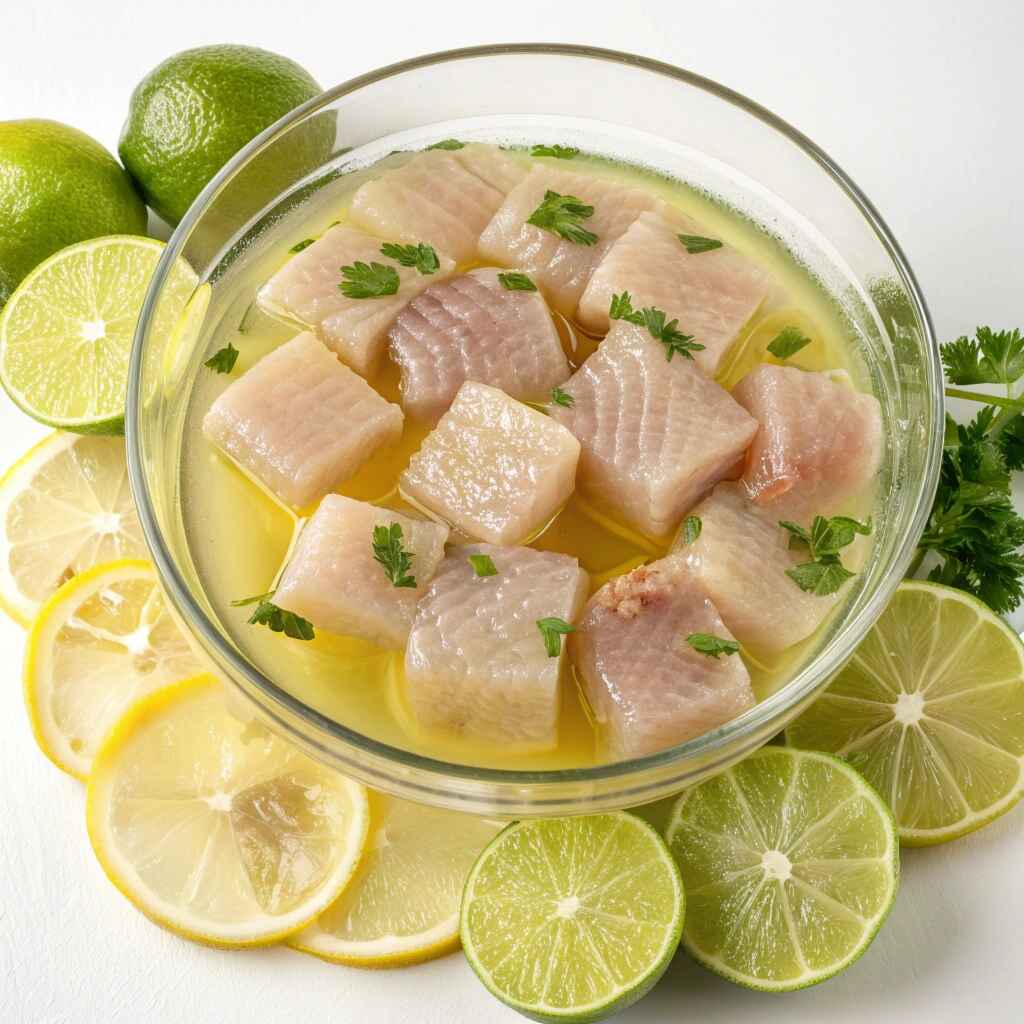
Rinse and pat dry your white fish. Cut it into small, even cubes—about 1/2-inch pieces work best. This ensures the citrus cures the fish evenly. Place the pieces in a glass or ceramic bowl (never metal, as it reacts with acid).
Step 2: Add the lime juice
Pour the fresh lime juice over the fish. Make sure the pieces are fully submerged. Cover the bowl and place it in the fridge. Let it marinate for at least 30 minutes, up to 2 hours. You’ll know it’s done when the fish turns firm and opaque.
Step 3: Mix in the vegetables
Once the fish is “cooked,” drain about half the lime juice (unless you like it extra tangy). Add in the sliced red onion, chopped peppers, diced tomato (if using), and fresh cilantro. Gently mix everything together.
Step 4: Add final touches
Now’s the time to stir in diced avocado for creaminess or a tablespoon or two of coconut milk if you want a silky texture like in this Thai-inspired variation from Food & Wine. Sprinkle with salt to taste. Let it sit another 5–10 minutes for flavors to mingle.
Step 5: Serve immediately
Spoon your ceviche into a shallow dish or over tostadas. For a fun presentation, serve it in lettuce cups or little jars for parties. Add extra lime wedges and a side of tortilla chips for crunch.
Flavor Boosts from Grandma’s Kitchen
This is where your creativity, and Grandma’s legacy, comes alive. We often added thin slices of cucumber for extra crunch, or swapped in scallops or shrimp for a change. You can also add a drizzle of salsa macha for a bold, smoky heat, like one Food & Wine recipe does with tuna ceviche. Another favorite? Toss in a few corn kernels for sweetness and texture.
As long as you stick to the basics, good fish, bright citrus, and fresh herbs, you can make it your own every time. That’s what makes ceviche not just a recipe, but a ritual.

Serving Ceviche & Creative Twists
Tostadas, Lettuce Cups & Tacos
Ceviche is so versatile, it adapts to whatever mood—or mealtime—you’re in. In our house, we often serve it on crisp tostadas, just like Grandma did on warm summer nights. Sometimes we pile it into small lettuce cups for a lighter, party-ready version, or spoon it into soft tortillas for a twist on fish tacos.
If you want to impress guests, serve ceviche in chilled martini glasses with avocado slices and a sprinkle of sea salt. Or, for a colorful spread, offer it family-style with bowls of diced mango, extra lime wedges, and a side of habanero crema (inspired by this spicy version from Food & Wine).
How to Store Leftovers (and When to Say Goodbye)
Here’s the truth: ceviche is best served fresh. Once the fish has been marinated in citrus, the clock starts ticking. For the best texture and flavor, serve your ceviche within 2 hours of making it. If you must store leftovers, place them in an airtight container and refrigerate for up to 24 hours.
However, the fish continues to “cook” in the lime juice, which can make it rubbery or overly acidic if left too long. If your ceviche smells off, turns mushy, or the lime loses its brightness, it’s time to let it go.
If you’re prepping ahead for a party, you can slice the veggies and marinate the fish separately—just combine everything shortly before serving. That keeps the textures crisp and the flavors balanced.
FAQs About Ceviche Recipe
What are the ingredients for ceviche?
The classic ceviche recipe includes raw white fish (like snapper or sea bass), fresh lime juice, red onion, chiles, and cilantro. Optional ingredients include avocado, tomato, and coconut milk depending on your regional twist. The key is using very fresh, high-quality seafood and plenty of citrus to cure the fish properly.
What is the secret ingredient in ceviche?
There’s no one-size-fits-all secret, but many chefs and home cooks add a touch of coconut milk, mango, or even green olives for complexity. In our family, Grandma swore by a splash of coconut milk to balance the acidity of the lime. Others might say the secret is time, letting the citrus marinate the fish just long enough.
Is ceviche cooked or raw?
Ceviche uses a process called acid denaturation. The fish is technically raw, but the acid in the lime or lemon juice changes its texture and color in the same way heat would. So while it isn’t heat-cooked, it’s not raw in the traditional sense either.
How long to let ceviche soak?
The soak time depends on the thickness of the fish. Thin slices may be ready in 15–20 minutes, while thicker cubes may need 30 minutes to 2 hours. It’s done when the fish turns opaque and firm. Avoid over-soaking to keep the texture tender and avoid bitterness
Ceviche is more than a dish—it’s a memory, a moment, a celebration of simplicity and flavor. Whether you’re preparing it as a quick appetizer or a full-on family feast, this ceviche recipe brings the flavors of Latin America right to your table.
For me, it’s a link to Grandma’s hands, to the hum of our kitchen, and to the joy of sharing something deeply comforting with the people I love. I hope this recipe becomes a part of your family’s story too.
Don’t forget to explore more vibrant, family-loved recipes on Clarice Recipes’ home page, where tradition is always on the table.