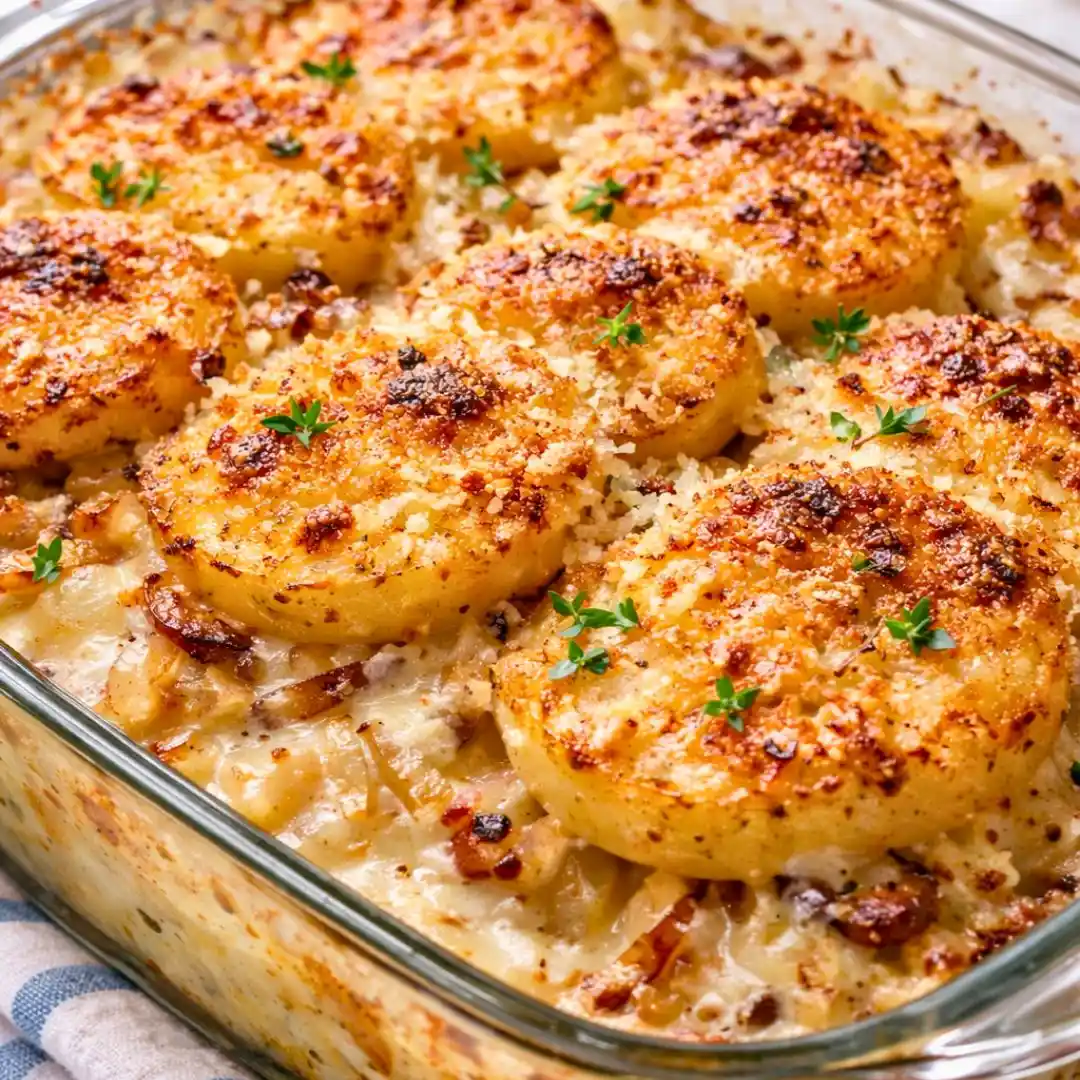
Creamy baked potatoes represent the ultimate comfort food, transforming humble russet potatoes into a luxurious casserole through layers of tender slices, caramelized onions, and silky Parmesan cream. This baked potato dish combines fork-tender potatoes with sweet caramelized onions and rich heavy cream for an unforgettable side dish that steals the spotlight at any dinner table. The result is a golden-topped, creamy baked potato casserole with crispy edges and a tender, custard-like interior that melts on your tongue.
| Prep Time | 20 minutes |
|---|---|
| Cook Time | 70 minutes |
| Total Time | 90 minutes |
| Servings | 6-8 servings |
| Difficulty | Easy to Intermediate |
| Cuisine | American, French-inspired |
Why This Recipe Works
I developed this creamy baked potato recipe after years of testing casserole techniques, and the magic lies in three critical elements that work in perfect harmony. First, the caramelized onions provide deep, sweet umami notes that transform ordinary potatoes into something extraordinary. The slow 20-25 minute caramelization process breaks down the onions’ natural sugars, creating a rich foundation that elevates every bite.
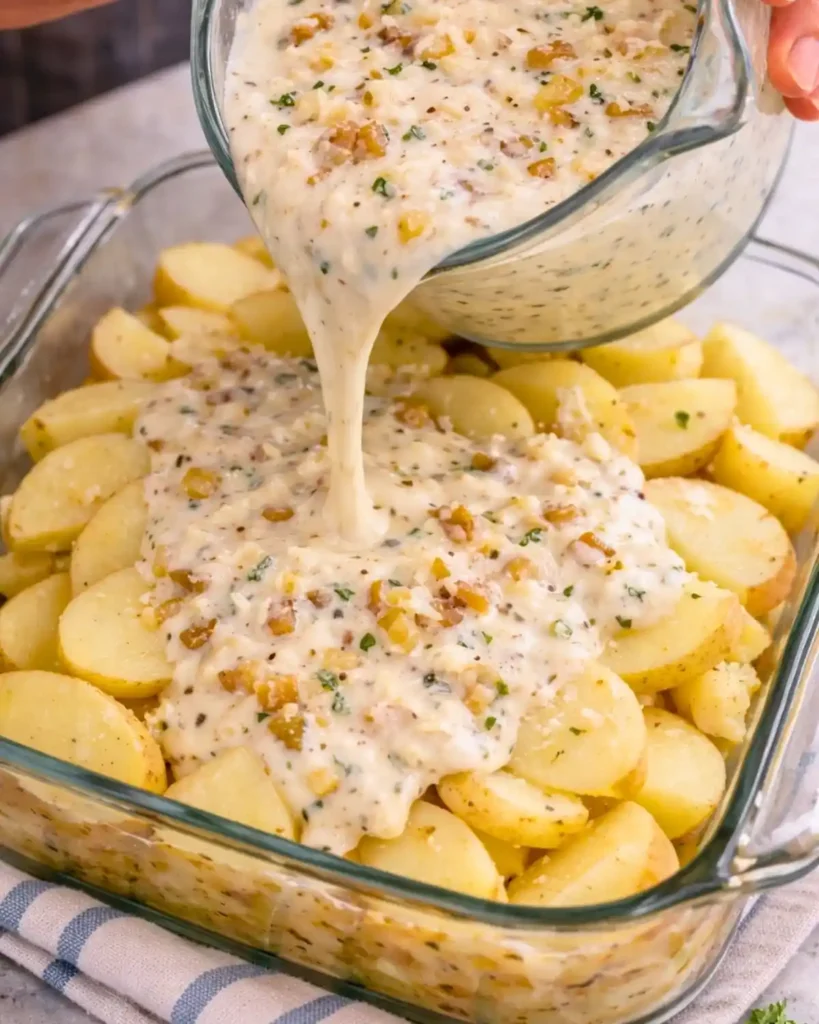
Second, the creamy pour-over mixture of heavy cream and Parmesan cheese creates a silky sauce that cooks into the potatoes, infusing them with luxurious flavor while keeping them moist. I’ve found that adding fresh thyme to this cream mixture adds an herbaceous brightness that prevents the dish from feeling too heavy or monotonous. This combination works because the cream’s fat carries flavor throughout the dish while the Parmesan adds umami depth and helps the sauce coat each slice.
Third, the two-stage baking method ensures perfectly tender potatoes with a beautifully browned top. Covering the dish with foil for the first 45-55 minutes creates a steaming environment that cooks the potatoes evenly without drying them out. Removing the foil for the final 15-20 minutes allows the top to brown and crisp, creating textural contrast that makes this baked potato casserole truly irresistible.
Ingredients
| Ingredient | Quantity | Notes and Alternatives |
|---|---|---|
| Unsalted butter | 2 tablespoons (plus 1 tablespoon for greasing) | Use high-quality butter for best flavor. Unsalted allows you to control salt levels. Ghee works as a richer alternative. |
| Yellow onions, thinly sliced | 2 large (about 1 pound) | Yellow onions caramelize beautifully and turn sweet. Vidalia onions are a sweeter alternative. White onions lack the depth. |
| Granulated sugar (optional) | 1 teaspoon | Speeds up caramelizing by providing extra sweetness. Skip if you prefer slower, more natural caramelization. |
| Olive oil (optional) | 1 tablespoon | Add only if onions look dry during cooking. Prevents sticking without changing flavor profile significantly. |
| Heavy cream | 2 cups | Full-fat heavy cream creates the richest texture. Half-and-half can substitute but results in less creamy baked potatoes. |
| Finely grated Parmesan cheese | 1 cup (plus 2 tablespoons for topping) | Freshly grated Parmigiano-Reggiano offers superior flavor to pre-shredded. Gruyère or aged Cheddar provide interesting variations. |
| Kosher salt | 1 1/2 teaspoons, divided | Kosher salt has larger crystals for better seasoning control. Sea salt works equally well. Adjust based on Parmesan saltiness. |
| Freshly ground black pepper | 1 teaspoon | Freshly ground pepper provides superior flavor to pre-ground. Adjust to taste preference for spice level. |
| Fresh thyme leaves, chopped | 2 teaspoons (or 1 teaspoon dried) | Fresh thyme offers bright herbaceous notes. Rosemary or oregano substitute well but change the flavor profile significantly. |
| Russet or Yukon Gold potatoes, peeled and thinly sliced | 3 pounds | Russet potatoes are starchy and fluffy; Yukon Gold is creamier. Combination works best. Red potatoes lack starch for proper texture. |
| Cooking spray or butter for greasing | 1 tablespoon | Either option prevents sticking. Butter adds subtle flavor; spray provides more neutral result. |
Step-by-Step Instructions
Preparation Phase
- Preheat your oven to 375°F (190°C) for 10 minutes so it reaches the correct temperature before baking begins.
- Lightly grease a 9×13-inch glass casserole dish with 1 tablespoon butter or cooking spray, ensuring all surfaces are covered to prevent sticking.
Caramelizing the Onions
- Melt 2 tablespoons butter in a large skillet over medium heat, allowing it to foam slightly for optimal browning.
- Add the sliced onions and 1/2 teaspoon salt, stirring to coat evenly with the melted butter and seasonings.
- Cook, stirring occasionally, for 20-25 minutes, lowering the heat if onions start browning too quickly to prevent burning.
- Add 1 tablespoon olive oil and a splash of water if onions seem dry or start to scorch on the bottom of the pan.
- Sprinkle in the optional 1 teaspoon sugar if you’d like to speed up the caramelizing process and develop deeper color.
- Continue cooking until the onions are soft, golden brown, and smell sweet and complex, checking doneness by piercing with a fork.
- Remove from heat and let cool slightly for 3-5 minutes to prevent curdling the cream when combined.
Making the Creamy Pour-Over Mixture
- Whisk together the heavy cream, 1 cup grated Parmesan, remaining 1 teaspoon salt, black pepper, and chopped thyme in a medium bowl or large measuring cup with a spout.
- Stir in the warm caramelized onions until everything is well combined and the onions are evenly distributed throughout the cream.
Preparing the Potatoes
- Peel the potatoes if desired for a refined presentation, or leave the skins on for more texture and nutrients in your baked potato dish.
- Slice potatoes into thin rounds, about 1/8-inch thick, using a sharp chef’s knife or mandoline slicer for even cooking.
- Keep the sliced potatoes in a bowl of cold water until you’re ready to layer them to prevent browning and remove excess starch.
Layering and Assembly
- Drain the sliced potatoes thoroughly on paper towels to remove excess water that could dilute the creamy sauce.
- Arrange the sliced potatoes evenly in the greased glass casserole dish, spreading them out so there are no large clumps or gaps.
- Give the creamy pour-over mixture a quick stir, then slowly pour it over the raw potatoes in the casserole dish.
- Distribute the onions and herbs as evenly as possible by gently shaking the dish or using a spoon to nudge potatoes.
- Sprinkle the remaining 2 tablespoons grated Parmesan over the top for a golden, crusty finish on your creamy baked potatoes.
- Cover the dish tightly with foil so the potatoes can steam and soften without drying out during the initial baking period.
Baking and Finishing
- Place the covered glass casserole dish on the middle rack of the preheated oven to ensure even heat distribution.
- Bake for 45-55 minutes, checking doneness by piercing the center with a knife until potatoes are fork-tender throughout.
- Remove the foil and continue baking for another 15-20 minutes, or until the top is bubbly and lightly golden with browned edges.
- Let the potatoes rest for at least 10 minutes before serving so the creamy sauce can thicken slightly and flavors can meld.
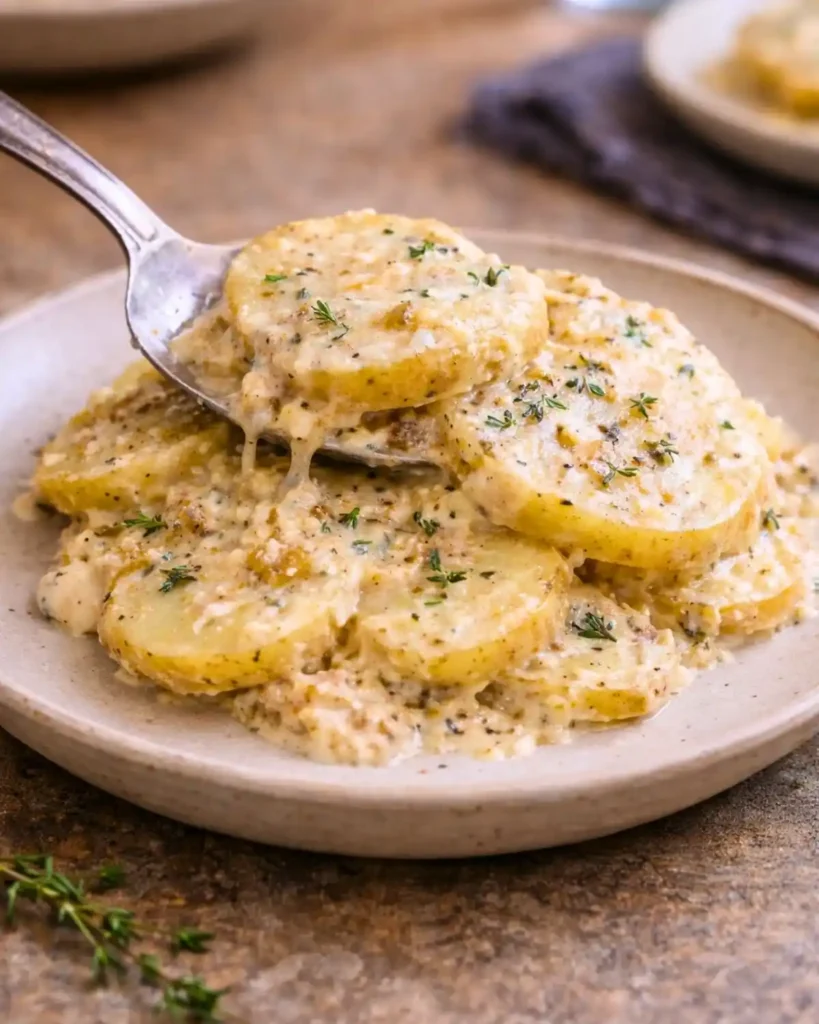
- Spoon into bowls or onto plates and serve warm for an absurdly satisfying, cozy meal that feels like home.

Chef Tips for Perfect Results
- Slice potatoes uniformly: Use a mandoline slicer set to 1/8-inch for perfectly even slices that cook at identical rates, ensuring no undercooked hard spots or overcooked mushy areas in your baked potato casserole.
- Don’t rush the onions: The 20-25 minute caramelization is non-negotiable for deep flavor development. Low and slow extraction of natural sugars creates the sweet complexity that distinguishes excellent creamy baked potatoes from mediocre versions.
- Use freshly grated Parmesan: Pre-shredded cheese contains cellulose and anti-caking agents that prevent melting smoothly. Freshly grate a block of Parmigiano-Reggiano for a silkier sauce and superior flavor in this creamy dish.
- Keep potatoes submerged: Layer potatoes evenly so the cream reaches all slices. Use a spoon to gently press down and ensure cream flows between layers for uniform cooking throughout the casserole.
- Test doneness with a knife: Pierce the center of the dish with a sharp knife; if it slides through easily without resistance, potatoes are perfectly fork-tender and ready for the uncovered browning phase.
- Let it rest before serving: The 10-minute rest allows the sauce to thicken from the residual heat and makes portioning cleaner. This rest period also allows flavors to equilibrate for a more cohesive, balanced taste in every serving.
Common Mistakes to Avoid
Mistake 1: Burning the Onions
Why it happens: Heat set too high causes onion sugars to burn rather than caramelize, creating bitter, acrid flavors that ruin the entire dish. Impatience tempts cooks to crank the heat to speed up the process, backfiring spectacularly.
How to fix it: Cook onions over medium heat for the full 20-25 minutes without rushing. Lower the heat to medium-low if you see dark brown spots forming. Add a splash of water to cool the pan if the bottom shows any scorching.
Mistake 2: Using Thick-Sliced Potatoes
Why it happens: Potatoes thicker than 1/8-inch take too long to cook and may remain firm while the edges of the casserole turn mushy. Inconsistent slice thickness compounds this problem exponentially.
How to fix it: Invest in a mandoline slicer for consistent 1/8-inch thickness. If using a knife, practice drawing the blade at a shallow angle and check slice thickness by holding slices up to light.
Mistake 3: Skipping the Foil Cover
Why it happens: Uncovered baking causes the cream to evaporate too quickly while potatoes remain undercooked, resulting in a dry, disappointing casserole with hard centers rather than creamy baked potatoes.
How to fix it: Cover the dish tightly with foil for the first 45-55 minutes to trap steam and cook potatoes gently. Remove foil only for the final 15-20 minutes to brown the top.
Mistake 4: Using Pre-Shredded Cheese
Why it happens: Pre-shredded Parmesan contains cellulose, anti-caking agents, and starch that prevent smooth melting and create a grainy, gritty texture rather than silky sauce in creamy baked potatoes.
How to fix it: Always grate cheese from a block of Parmigiano-Reggiano using a box grater or microplane. Freshly grated cheese melts evenly and creates a luxurious cream texture.
Mistake 5: Serving Immediately Without Resting
Why it happens: The cream hasn’t thickened from residual heat, so portions fall apart when spooned onto plates and the dish looks soupy rather than set and elegant.
How to fix it: Remove the casserole from the oven and let it rest for a full 10 minutes before cutting or spooning. This allows the sauce to set slightly while keeping creamy baked potatoes warm and perfect for serving.
Variations and Substitutions
| Ingredient | Substitution | Impact on Flavor and Texture |
|---|---|---|
| Heavy cream | Half-and-half or whole milk | Results in thinner sauce and less rich mouthfeel; creamy baked potatoes become lighter but less luxurious. Half-and-half works better than milk. |
| Parmesan cheese | Gruyère, aged white Cheddar, or Emmental | Gruyère adds nutty sophistication; Cheddar creates sharper tang. Each creates distinctly different creamy baked potato flavor profiles. |
| Fresh thyme | Rosemary, oregano, or fresh chives | Rosemary adds piney earthiness; oregano introduces Mediterranean flair; chives provide mild onion notes that complement the caramelized onions. |
| Yellow onions | Vidalia onions or shallots | Vidalia creates sweeter, milder sauce; shallots add sophisticated garlic-like complexity to creamy baked potatoes. Both caramelize beautifully. |
| Russet potatoes | Yukon Gold or combination of both | Yukon Gold creates creamier texture and buttery flavor; Russet adds starchiness and fluffiness. Combination offers optimal balance. |
| Salt and pepper only | Add sautéed mushrooms, truffle oil, or fresh garlic | Mushrooms add earthy depth; truffle oil creates luxury restaurant feel; fresh garlic adds pungent bite. Each transforms creamy baked potatoes entirely. |
Serving Suggestions and Pairings
Creamy baked potatoes shine as a sophisticated side dish at formal dinner parties, positioned beside herb-roasted chicken breast or pan-seared filet mignon for an elegant presentation. This casserole pairs exceptionally well with roasted vegetables like Brussels sprouts or asparagus, which provide bright acidity and textural contrast to the creamy richness.
Serve creamy baked potatoes alongside grilled lamb chops or herb-crusted pork tenderloin for a restaurant-quality meal at home. The luxurious sauce complements medium-rare red meat beautifully while cutting through richness with its savory depth. For holiday entertaining, this dish pairs perfectly with roasted turkey or prime rib, offering comfort food sophistication that impresses guests.
Vegetarian dinner menus benefit tremendously from creamy baked potatoes as the main attraction, surrounded by roasted beets, sautéed spinach, and crusty artisan bread for soaking up every drop of sauce. Serve alongside a crisp green salad with lemon vinaigrette to provide acid balance and palate cleansing between bites of rich, creamy potato casserole.
Casual weeknight dinners transform into special occasions when you present creamy baked potatoes with simple rotisserie chicken and roasted broccoli. The recipe feeds 6-8 people generously, making it perfect for family gatherings, potluck contributions, or meal prep for upcoming weeknight dinners.
Storage and Reheating
| Method | Duration | Instructions |
|---|---|---|
| Refrigerator Storage | 3-4 days | Cool creamy baked potatoes completely, then cover tightly with plastic wrap or transfer to an airtight container. Store on a shelf, not the door, for consistent cold temperatures. |
| Freezer Storage | 2-3 months | Cool completely, then cover the baking dish tightly with plastic wrap and foil. Alternatively, spoon into individual freezer containers. Thaw overnight in refrigerator before reheating. |
| Oven Reheating (Best Method) | 25-35 minutes | Preheat oven to 325°F. Transfer creamy baked potatoes to an oven-safe dish if needed. Cover with foil and bake for 25-35 minutes until heated through. Remove foil for last 5 minutes to re-crisp the top. |
| Microwave Reheating (Quick Method) | 3-5 minutes | Transfer portion to a microwave-safe bowl, cover loosely with a damp paper towel, and microwave at 50% power for 3-5 minutes, stirring halfway through. Texture won’t be as good as oven method. |
| Stovetop Reheating | 10-15 minutes | Transfer to a heavy skillet over medium-low heat. Stir occasionally and cover with a lid. Add a splash of cream if the mixture looks dry. Heat until warmed through, about 10-15 minutes. |
Nutritional Information
Approximate values per serving (based on 8 servings):
| Nutrient | Amount per Serving |
|---|---|
| Calories | 385 kcal |
| Protein | 12 grams |
| Total Fat | 22 grams |
| Saturated Fat | 14 grams |
| Carbohydrates | 38 grams |
| Dietary Fiber | 3 grams |
| Sugars | 4 grams |
| Sodium | 480 mg |
Note: Nutritional values are estimates and may vary based on specific ingredient brands and portion sizes. Leaving potato skins on increases fiber content slightly.
Frequently Asked Questions
Can I make creamy baked potatoes ahead of time?
Yes, you can assemble the entire casserole up to 24 hours ahead of baking. Layer the raw potatoes and pour the cream mixture over them, then cover tightly with plastic wrap and refrigerate. Bake directly from the refrigerator, adding 10-15 minutes to the initial covered baking time since the dish starts cold.
How do I know when creamy baked potatoes are perfectly done?
The potatoes are fork-tender and perfectly done when a sharp knife inserted into the center slides through easily without resistance after the initial 45-55 minute covered baking period. The top should be bubbly and lightly golden with browned, crispy edges after uncovering and baking the final 15-20 minutes.
Why are my creamy baked potatoes watery instead of creamy?
Watery texture results from either using thin cream or half-and-half instead of full-fat heavy cream, not caramelizing the onions long enough so they release water into the sauce, or not resting the dish after baking so the sauce can thicken. Use full-fat cream, caramelize onions the full 20-25 minutes, and always rest for 10 minutes before serving.
Can I substitute sour cream or Greek yogurt for heavy cream?
Sour cream and Greek yogurt create curdled, separated sauces when baked at 375°F due to their acidity and low fat content. Heavy cream’s high fat content prevents curdling and creates the silky texture essential to exceptional creamy baked potatoes. For lighter versions, substitute half-and-half but expect a thinner sauce.
What’s the best way to make creamy baked potatoes lower in calories?
Use half-and-half or whole milk instead of heavy cream, reduce the Parmesan to 3/4 cup, and use half the butter for caramelizing onions (they’ll cook slower but still develop good color). These changes reduce calories by approximately 100-150 per serving while maintaining recognizable creamy baked potato character and flavor.
Conclusion
Creamy baked potatoes deliver unparalleled comfort and sophisticated elegance in a single casserole dish that impresses family and guests alike. This recipe transforms simple ingredients into a restaurant-quality side dish through careful attention to caramelizing onions, proper layering technique, and thoughtful seasoning with fresh herbs and quality Parmesan cheese. The result is a creamy baked potato casserole with tender, silky potatoes, sweet caramelized onions, and crispy golden edges that evokes pure warmth and satisfaction with every spoonful.
Creamy Baked Potatoes with Caramelized Onions

This luxurious casserole elevates baked potatoes with caramelized onions, a silky Parmesan cream sauce, and golden, crisp edges, making it a comforting and elegant side dish perfect for any dinner table.
- Prep Time: 20
- Cook Time: 70
- Total Time: 90
- Yield: 6-8 servings
- Method: Baking
- Cuisine: American, French-inspired
- Diet: Vegetarian
Ingredients
4 large russet potatoes
1.5 cups finely chopped red or yellow onions
1 teaspoon sea salt
0.5 teaspoon black pepper
2 cups heavy cream
0.75 cup freshly grated Parmesan cheese
1 tablespoon fresh thyme leaves
1 tablespoon vegetable oil
Instructions
Preheat the oven to 375°F (190°C)
Grease a 9×13-inch baking dish with 1 tablespoon of butter and set aside
Peel the potatoes and slice them into very thin rounds (about 1/16-inch thick)
Sprinkle the potato slices with 0.5 teaspoon of sea salt and 0.25 teaspoon of black pepper and set aside
In a large skillet, melt 2 tablespoons of butter and 1 tablespoon of vegetable oil over medium heat. Add the chopped onions and cook, stirring occasionally, for 20-25 minutes until deeply caramelized. Season with the remaining 0.5 teaspoon of sea salt and 0.25 teaspoon of black pepper and set aside
In a large bowl, whisk together heavy cream, Parmesan cheese, and fresh thyme leaves to create a smooth, silky sauce
Layer half of the potato slices in the prepared baking dish, followed by half of the caramelized onions
Repeat with another layer of potato slices and the remaining onions
Pour the cream and Parmesan sauce evenly over the layers, ensuring the top is covered
Dot the surface lightly with the remaining 2 tablespoons of butter
Cover the dish with aluminum foil and bake for 45-55 minutes
Remove the foil and bake for an additional 15-20 minutes, or until the top is golden and crisp
Let the casserole rest for 5-10 minutes before serving
Notes
To ensure the potatoes cook through and remain tender, keep the slices uniformly thin
The cream sauce should be poured while the casserole is hot in the oven to help it distribute evenly
For a dairy-free version, substitute butter and heavy cream with vegan alternatives and skip the Parmesan cheese for a dairy-free option
Leftovers are best stored in an airtight container in the refrigerator for up to 2-3 days